
People inherit rugs, buy them abroad, carry them in from the last posting, or pick one up because it matched the sofa — and then have no idea what they are standing on. That matters, because the single most expensive mistake in rug ownership is treating an heirloom like a doormat, and the second most expensive is paying heirloom money to clean a doormat. Here is enough to tell the difference.
How a Rug Is Actually Made
Every pile rug is built on a grid. Vertical threads called warps run the length of the rug and are what the fringe is — the fringe is not sewn on, it is the foundation poking out of both ends. Horizontal threads called wefts run across and lock each row in place. Whatever sits between them, and how it got there, is what separates a thousand-dollar rug from a hundred-dollar one.
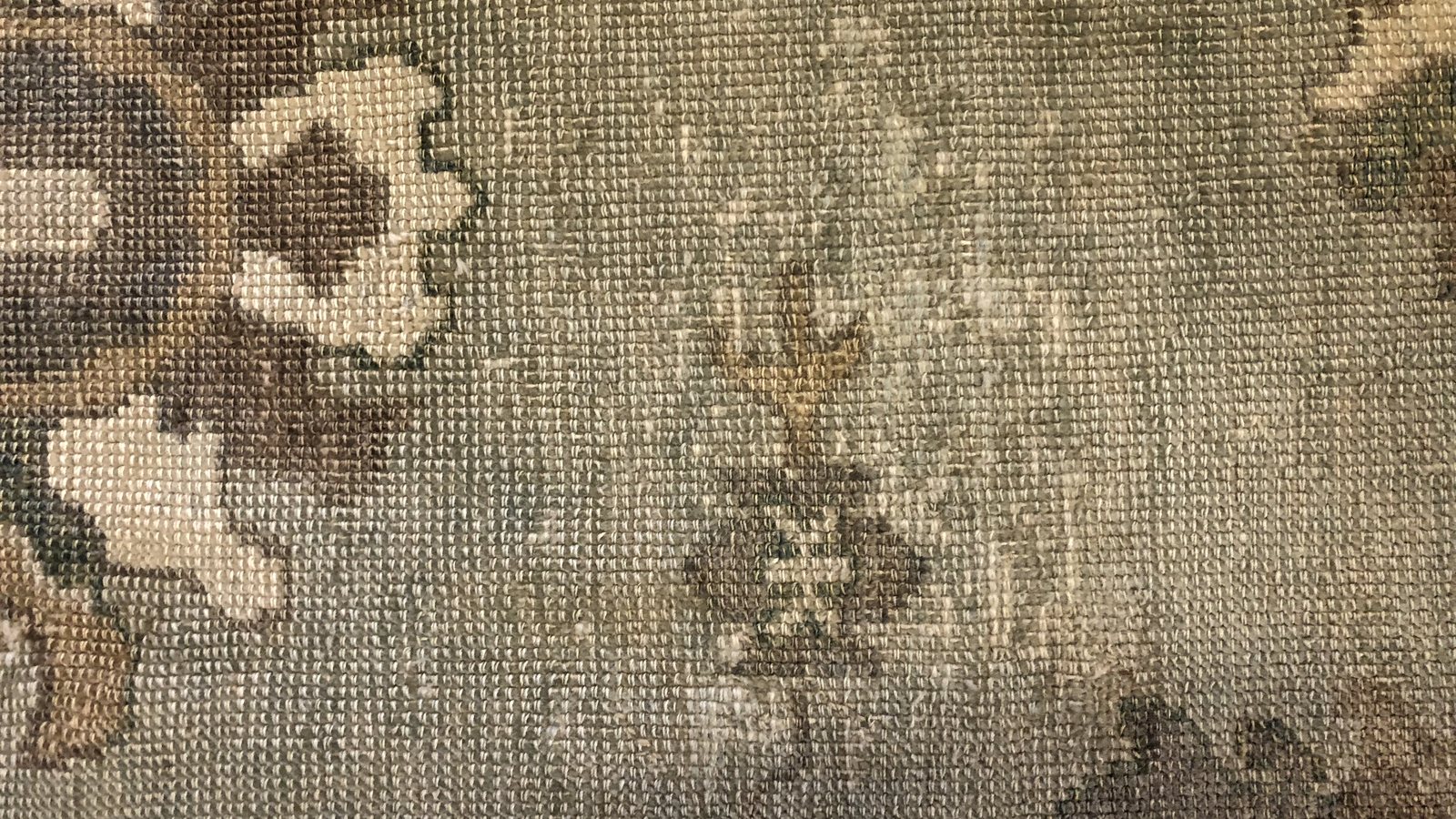
In a hand-knotted rug, a weaver ties individual loops of wool or silk around pairs of warps, packs a row down, passes a weft, and does it again. A nine-by-twelve with a middling knot count contains a couple of million of them. That is why a real Persian rug costs what it costs, and why it can survive three generations and a wet floor.
Knot types
- Persian (asymmetric) knot — wraps one warp fully and passes loosely behind the other. Allows finer detail and curved patterns, so it shows up in Persian, Indian and Chinese weaving.
- Turkish (symmetric) knot — wraps both warps evenly. Sturdier, slightly more geometric, common in Turkish and Caucasian rugs.
- Tibetan loop knot — wool looped continuously over a rod, then cut. Modern and fast, and the reason contemporary Nepalese rugs have that thick, even pile.
Telling Hand-Knotted from the Rest in Ten Seconds
Turn the rug over. That is the whole trick, and it settles the question faster than any label.
| Construction | The back looks like | What it means |
|---|---|---|
| Hand-knotted | The pattern is visible on the back, in slightly imperfect knots. Fringe is continuous with the foundation. | Decades to centuries of life. Fully cleanable and fully repairable. Holds value. |
| Hand-tufted | A canvas or scrim backing glued on, hiding everything. Fringe is sewn on as a separate strip. | Ten to twenty years. The latex adhesive eventually fails and smells. Cleanable with care. |
| Machine-made | Perfectly uniform grid, often with a stiff synthetic backing. Faultlessly regular, which is the tell. | Five to fifteen years. Very cleanable, essentially not repairable. Inexpensive to replace. |
| Flatweave (kilim, dhurrie) | No pile at all. Same pattern both sides, reversible. | Durable and light. Needs careful moisture control in cleaning. |
Quick field test: bend the rug back on itself and look at the base of the pile. Knots tied around visible warps mean hand-knotted. A wall of glue means tufted.
Fibres, and What Each One Wants
Wool
The default for good reason. Wool fibres are naturally coiled, so they spring back under furniture; they carry lanolin, which repels soil until you strip it out with harsh detergent; and they are hard to ignite. Wool also holds close to a third of its own weight in water without feeling damp to the hand — excellent for comfort, and a genuine liability in a house nobody is dehumidifying through a Carolina August. That single property is behind most of the musty-rug calls we get.
Silk
Fine, strong in tension, and unmatched for detail and sheen. Also unforgiving: it scorches under heat, weakens when it stays wet, and browns if a spill is left. Silk rugs belong away from direct traffic and direct sun, and they never get a full-immersion wash.
Viscose, bamboo silk, art silk
All the same thing under different marketing: regenerated cellulose. It looks like silk in the showroom and behaves like wet paper in real life. Viscose loses most of its strength when saturated, yellows from plain water, and mats permanently underfoot. If you own one, keep it out of dining rooms and doorways, keep it off any floor a dog crosses, and never let anyone wet-clean it conventionally.
Cotton
Usually the foundation rather than the pile, and in flatweaves the whole rug. Cotton absorbs heavily, shrinks if it is dried under tension, and is the first part of a rug to rot after a soaking. It is also easy to work with, which is why flatweaves are the most forgiving rugs to own.
Jute, sisal and seagrass
Beautiful texture, terrible relationship with water. These plant fibres stain from their own moisture, brown at the edges, and mildew faster than anything else in a damp room. We would not put one on a screened porch, in a basement room or in an entry hall anywhere in this region, and certainly not in a house that empties for the summer.
Synthetics
Polypropylene, nylon and polyester. Cheap, fade-resistant, and genuinely practical for a rental, a student house or a family room that opens onto a clay yard. They crush under furniture and cannot be repaired, but they clean well and cost little to replace — which is the whole point of them.
Triangle Care Notes
Most rug care advice online is written for a dry climate and quietly fails here. Roughly forty-five inches of rain falls on the Triangle in a year and it is spread across every month, so there is no dry season to lean on. Summer dew points sit in the seventies for weeks at a time, spring lays down a pine and oak pollen load you can see on a car bonnet, and the ground under all of it is iron-red clay. Adjust accordingly.
Never let a rug be wand-cleaned where it lies
This is the single most common way a good rug is damaged in this region, and it usually happens by accident: a crew is in the house doing wall-to-wall carpet, the hand-knotted rug is right there, and it gets the same treatment on the floor it is sitting on. A rug is open on both faces and the boards underneath absorb nothing, so the water has nowhere to drain and the rug dries downward over days. As the last of that moisture climbs back to the tips it carries dissolved lignin up out of the cotton foundation with it, and leaves a yellow-brown haze across the pile a week later that no amount of vacuuming touches. Meanwhile the floor has spent that week wet under a rug. Rugs go out of the house to be washed. There is no version of this that works in place.
The house that empties in May
Around the universities and in any rental between leases, the cooling gets switched off or pushed to eighty-five for the summer — and an air conditioner only removes moisture while it is actually running. A shut house with nothing running simply becomes the outdoor air with a hot roof over it, which in July here means weeks at a stretch with the dew point in the seventies. Anything wool left in that building comes out of the summer with mildew in the foundation and, often, insect grazing along the edges nobody walks on. If a house is going to sit empty, get the rugs out of it or at least off the floor, wash them before they are stored rather than after, and leave something running in the building.
Porches are outdoors, whatever the roof suggests
A covered or screened porch cools to the dew point on most clear nights from March to November, so a rug out there takes water on every single night, gives only part of it back during the day, and never dries at all along the strip touching the boards. Add the spring pollen, which lands far heavier outside than in, and the underside is where the trouble starts. Jute and sisal are the worst choice for a porch and the most commonly chosen. If you use a rug outdoors, use a synthetic one, lift it off the boards periodically, and do not bring it inside for the winter without washing it first.
Wash rugs after the pollen, and again after a move
Two moments in the year are worth planning around. The first is late spring, once the pine and oak have finished: pollen works down past the surface where a vacuum cannot reach it, and it is better out of the rug before the humidity arrives than sitting in the foundation through August. The second is a move. A rug that has been rolled, wrapped and carried is about to be laid flat in a new room for years, and that is the one moment when getting at both faces of it is easy. Creases set on a moving truck are also far easier to block out while they are fresh.
Mind what is under the rug
Two floors in this region need thinking about. Sealed concrete — a warehouse conversion, a podium deck in a newer building, a finished basement — keeps giving off moisture for a long time after it is built, and a solid rubber or vinyl pad on top of it is a vapour barrier that hands all of that to the back of your rug. And in older houses, look for floor supply registers: a register partly covered by a rug fires dry air into the pile all winter and makes the wool brittle in a strip, while gaps in the boards turn the rug into an air filter and leave a hard grey line that does not wash out with ordinary soil. Use a breathable pad, keep rugs clear of registers, and lift each rug a couple of times a year to look at both it and the floor.
Rotate for the light
Visible light, not just ultraviolet, takes the red out of madder and flattens indigo, and it is irreversible. The rooms that catch it hardest here are the loft conversions with industrial windows and the newer houses whose lots have no canopy on them yet. Rotate each rug a hundred and eighty degrees a couple of times a year, and shift the furniture feet an inch or two when you do, so the fading stays even instead of becoming a shape you cannot stop seeing.
Store rugs properly, not conveniently
A rug rolled into a garage, an attic or an unconditioned storage unit for a summer is being handed to insects and mildew at once: dark, undisturbed, warm and humid. The same goes for the plastic a mover wrapped it in — that is a seal, not protection, and whatever humidity went in with it stays in. Clean the rug before it goes away rather than after it comes back, roll it loosely with the pile facing out, keep it off the floor, and store it somewhere the air is conditioned.
Blot spills immediately, and skip the miracle cleaner
Press a white towel straight down and lift — do not rub, which drives the spill into the foundation and fuzzes the pile. Cool water is enough for most fresh spills. Over-the-counter spot removers are usually high-pH and will strip dye out of wool, turning a small problem into a permanent one. And nothing that is sold as washable applies to a wool rug: a machine, a bathtub or a pressure washer will felt the pile, shrink the foundation out of square, and set any dye that was going to run.
Act fast on water, however small the leak looked
A wet rug in a warm room has about forty-eight hours before mould takes hold in the foundation, and from April to October every room here is warm enough. Water that has run through a ceiling or across a floor is contaminated by the time it reaches wool, so it needs flushing rather than drying. Get the rug up off the floor, do not seal it in plastic, and get it to a specialist rather than pointing a fan at it. In a rented flat or a townhouse, do not wait for the building's crew to work down to your unit. Rugs people were ready to throw out are frequently recoverable. Here is what that restoration involves.
How Often Should It Be Cleaned?
| Where the rug lives | Professional cleaning |
|---|---|
| Entry, hallway, main living room | Every 12 months |
| Dining room or kitchen-adjacent | Every 12–18 months |
| Bedrooms and low-traffic rooms | Every 2–3 years |
| Homes with pets or allergy sufferers | Every 6–12 months |
| Screened porches and sunrooms | Every 12 months, and check the back twice a year |
| Before storage, a move or an empty summer | Always, and before rather than after |
| Any rug that has been wet | Immediately |
Is It Worth Anything?
Value in a hand-knotted rug comes from knot density, the quality of the wool, whether the dyes are natural or synthetic, age, origin, condition, and how good the design actually is. A finely woven antique in sound condition can be worth many times what a large coarse modern rug costs, even though the modern one covers more floor.
Two things people get wrong. First, condition matters enormously — unravelling ends and moth grazing knock value down fast, and both are repairable, which is why fixing them usually pays for itself. Second, wear is not automatically bad: an old rug with even, honest low pile and intact structure is worth far more than one with a hole in the middle and pristine corners.
If you are curious about something you inherited, or something that arrived with the last move, send photographs of the front, the back, and the ends. We will tell you what it is, roughly where it came from, and whether it is worth restoring — at no charge and with no pressure.
Short Glossary
- Warp — the lengthwise foundation threads; the fringe is their exposed ends.
- Weft — the crosswise threads that lock each row of knots.
- Pile — the surface you walk on, made of the cut knot ends.
- KPSI — knots per square inch; higher means finer detail and more work.
- Abrash — natural colour banding from different dye lots. A feature of hand-dyed wool, not a flaw.
- Selvedge — the wrapped side edges that keep the rug from unravelling sideways.
- Hygroscopic — describes wool itself and dried urine residue: both pull moisture out of the air and hold it in the fibre.
- Dry rot — foundation fibres weakened by prolonged damp; the reason wet rugs need urgency.
- Blocking — stretching a washed rug back to square while it dries.